
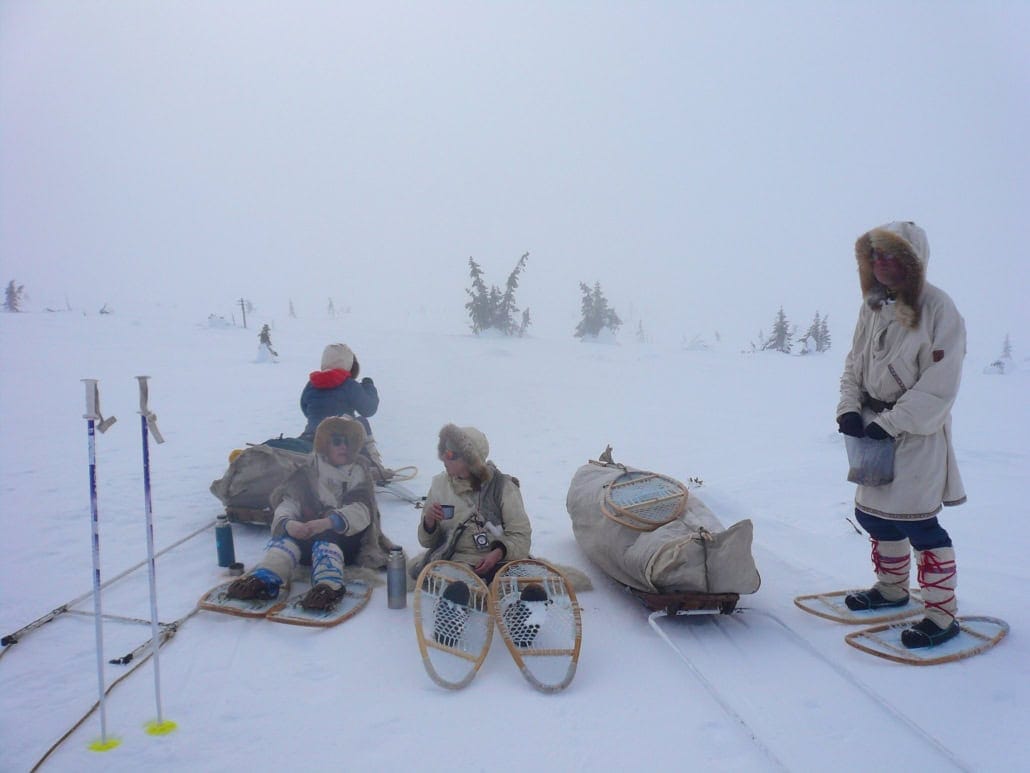
The origins of the Arctic Nomads
Back to the source
There was a time without a compass. Without GPS. Without a stove that you can ignite in ten seconds. There was only the landscape, the sky above, and people who had to learn where they were.
Before the compass existed
Thousands of years before a needle existed that pointed north, people in the high north found their way using what they saw around them. Stars that returned to the same spot every night. The direction of the wind. The shape of snow dunes, piled up by that same prevailing wind, which served as natural signposts for those who knew what to look for. They followed the reindeer, for the reindeer knew where the food was. The reindeer, in turn, became food, clothing, and transport.
The compass itself comes from far away. Chinese scholars discovered more than two thousand years ago that a piece of magnetite, a naturally magnetic stone known as a lodestone, always aligned itself in the same direction. It was not until around the eleventh century that Chinese seafarers used that insight to navigate. The compass reached Europe via the Arab world in the twelfth century. By the time the compass reached the high north, the people who had lived and traveled there for generations had long since found their own way to never get lost.
What remains and what disappears
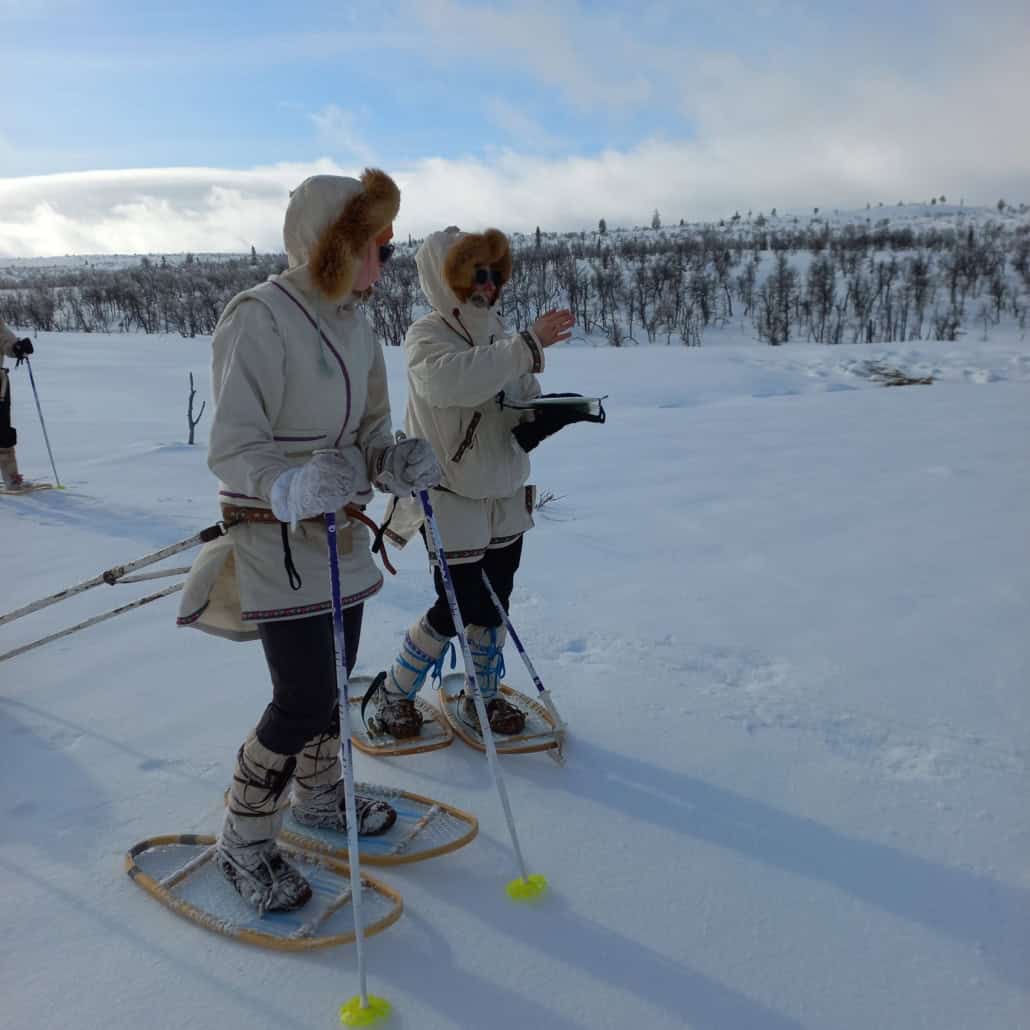
The clothing of those people was made of wool and reindeer hide. Materials that nature had perfected over thousands of years for exactly this cold. Materials that, once left behind, simply merge back into the ground.
Compare that to what is in most backpacks today. We are quick to think that with an invention like Gore-Tex, in less than thirty years, we have created something better than what nature perfected over tens of thousands of years. For comfort, perhaps. But to make such a fabric waterproof and breathable, fluorine compounds are required—substances now known as forever chemicals because they hardly break down. Not after a year. Not for generations. Wool and hide, once returned to the ground, simply disappear again. Perhaps that is the reason why you find so little in the landscape of the high north of those who traveled before us.
The hunt for the perfect picture
Once, people looked at the northern lights and believed in magic. They looked at a rainbow and thought of a treasure at the end. Wonder came naturally, simply because you were standing outside and looking.
Now we mostly look at a screen. We hunt for the next Reel, the next bucket-list dot on the map. Instead of a basket full of berries and mushrooms, we collect experiences. Instead of hunting for food, we hunt for the perfect picture, which, once you are there, usually turns out not to be exactly as it appeared on your screen.
While it was never about the destination. It was about the journey.
Curiosity as a compass
Fridtjof Nansen knew that. In 1888, he was the first, along with five companions, to cross the Greenland ice sheet. Not from the inhabited west coast, as everyone before him had attempted, but from the uninhabited east coast, so that returning was no longer an option. Two of his men, Ole Nielsen Ravna and Samuel Balto, were Sámi. Their knowledge of the north was one of the reasons the expedition succeeded.
Roald Amundsen knew it too. Years before he became the first to reach the South Pole in 1911, he lived for two winters with the Netsilik Inuit in Canada. He combined his Norwegian skis with what he learned there: traveling with dog pulks and clothing made of animal hides instead of wool. That combination of ancient knowledge and new means brought him further than his European competitors, who clung to their own equipment.
And Ernest Shackleton perhaps knew it best of all. In 1915, his ship, the Endurance, was crushed by the pack ice off the coast of Antarctica. He never achieved his original goal, the first crossing of the continent. However, after months on drifting ice and a grueling journey in an open boat across the Southern Ocean, he brought his entire crew home. Not despite the failure of the plan, but thanks to what he decided to do along the way.
None of these men were driven by a bucket list. They used the modern means of their time but did not let themselves be guided by them. They were driven by curiosity. By a kind of impatience to know what lay behind the next horizon.
The lavvu, and the people who invented it
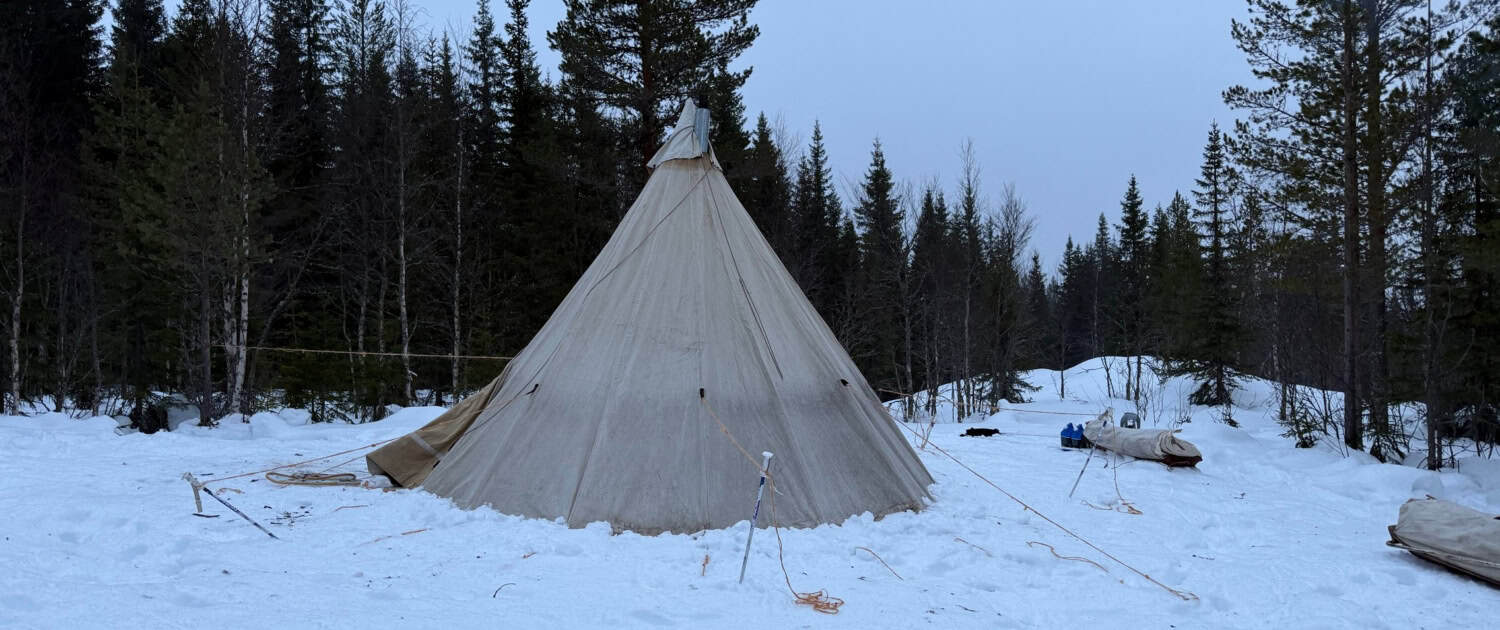
There is one shelter that has survived that curiosity for more than a thousand years. The lavvu. A tent shape developed by the Sámi for their journeys with reindeer through Scandinavia: low, conical, quick to set up and just as quick to pack away, built to stand firm in the wind instead of fighting against it. Originally made of reindeer hide over a frame of spruce wood, with a fire in the middle and a smoke hole at the top.
We use exactly that shelter at the Arctic Nomads.
What this means for you
With the Arctic Nomads, we go back to where it began. Not to less preparation, but to fewer assumptions.
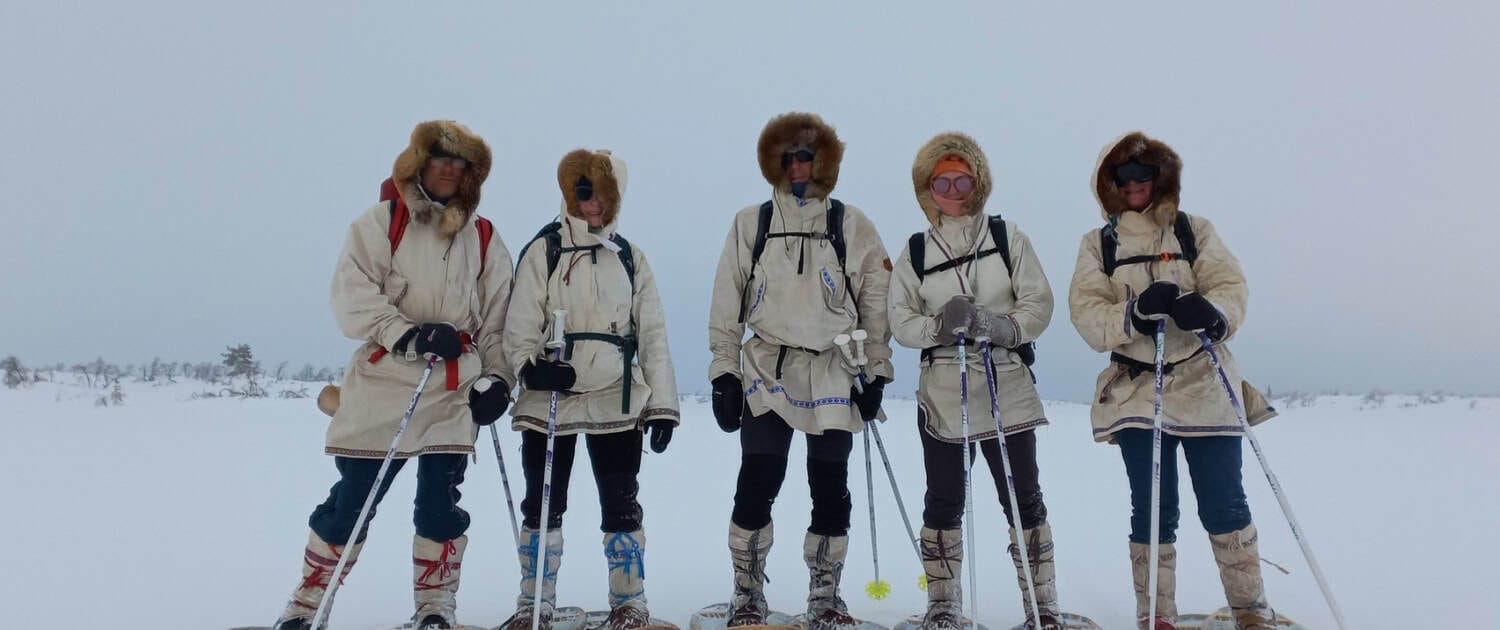
You sleep in a lavvu, around a fire, instead of in a technical dome tent. You head out on snowshoes, with original wooden pulks as has been done here for generations. You wear traditionally cut clothing, made of canvas cotton instead of Gore-Tex. You cook on a wood fire. For safety, an MSR stove is included, along with a satellite phone, just in case. The rest we do as it has always been done.
This is not the trip for those looking for the next Instagram post. This is the trip for those who are curious about where it all comes from. Outside your comfort zone, within the safety margin.
One evening, somewhere in the snow, you look up. No Wi-Fi, no signal. The same stars that once showed the first nomads the way. Still in exactly the same place.


 Facebook
 Instagram
 Pinterest
 LinkedIn
 YouTube
 WhatsApp
 Arctic Adventure Happenings





Leave a Reply
Want to join the discussion?Feel free to contribute!