Henk-Jan Yellow
Founder, expedition leader and IPGA polar guide
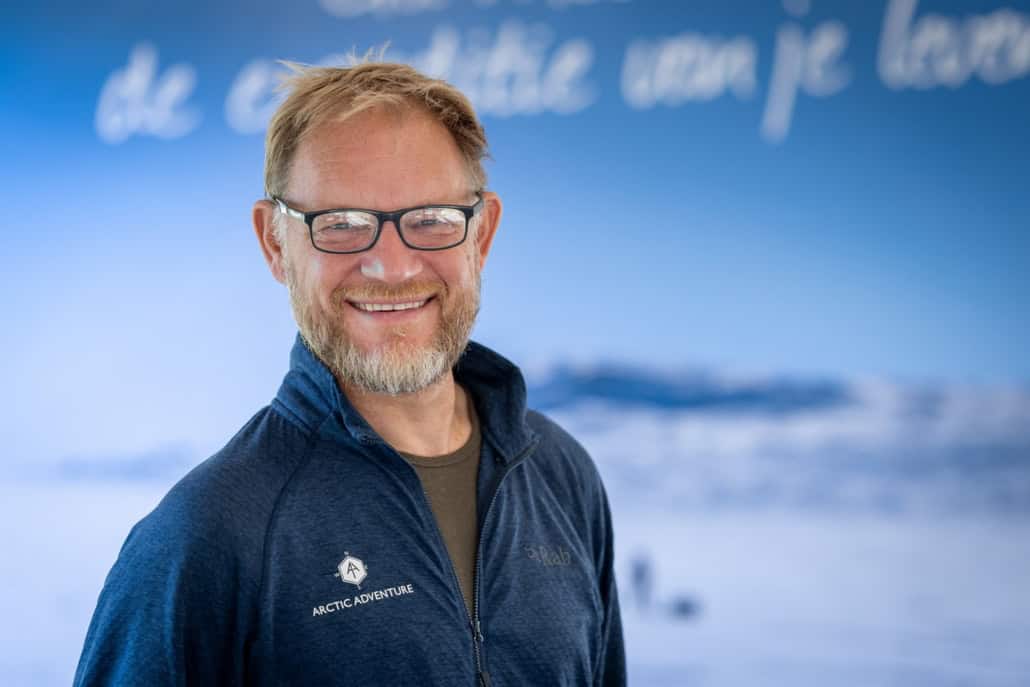
Henk-Jan Geel is the founder of Arctic Adventure, an expedition leader and an IPGA polar guide. Since 2018, he has been professionally guiding expeditions in Arctic and remote areas. Long before that, from his teenage years and around his twenties, he was already heading out on independent expeditions.
Within Arctic Adventure, Henk-Jan is responsible for developing expeditions, preparing participants, the safety approach, logistics and the supervision of guides and teams.
An expedition lets you feel how little you need, and how much you are actually capable of.
His starting point is simple: outside your comfort zone, inside the safety zone. This means participants can take on a real adventure, but never without preparation, structure and professional guidance.
Why Arctic expeditions?
What attracts Henk-Jan to Arctic expeditions is the peace. Getting away from it all for a while. No excess, no distractions, no constant stream of messages. Just the landscape, the group, the weather, the route and the pulk behind you.
In that pulk lies everything you need: food, stove, tent, sleeping bag, extra clothing and safety equipment. No more than that. With the right knowledge and preparation, that is enough to not only be safe on the way, but also to enjoy it.
For Henk-Jan, that is one of the most beautiful lessons of an expedition: discovering how little you actually need when you know what you’re doing.
From personal passion to Arctic Adventure
The love for expeditions didn’t arrive in a single moment. It crept in slowly. Henk-Jan was already heading out independently around the age of twenty. Later, when friends dropped out and stopped doing these kinds of trips, he noticed that he actually wanted to keep going.
Where others had had enough, something started to become clear to him: this wasn’t a temporary hobby, but something that was part of him.
Arctic Adventure eventually grew out of lectures. After presentations about winter camping and Arctic expeditions, Henk-Jan received more and more questions from people who wanted to join. The question became: how do you organize that responsibly?
For him, the answer lay mainly in equipment, preparation and guidance. If participants had to buy or figure out everything themselves, the threshold became high and the chance of making the wrong choices was great. That’s why he set up Arctic Adventure so that participants don’t just get a guide, but also access to the right expedition gear.
Greenland 2008: the starting point

A defining moment in Henk-Jan’s development as a guide was his first crossing of the Greenland Ice Sheet in 2008. He made that trip with five friends.
That expedition showed him what a real Arctic crossing requires: preparation, perseverance, mastery of equipment, mutual trust and the ability to find solutions in a completely remote environment.
In hindsight, that trip was more than a personal milestone. It was a starting point. The experience on the Greenland Ice Sheet formed an important foundation for what would later become Arctic Adventure.
Experience with Arctic expeditions
Henk-Jan has extensive experience with multi-day expeditions in Greenland, Sweden, Norway, Iceland and other remote areas. His experience log includes hundreds of expedition days, thousands of kilometers covered and experience in diverse conditions: from winter trips with skis and pulka to glacier expeditions, trekking, packrafting and logistical support.
His specialisms are:
- expeditions on the Greenland Ice Sheet;
- winter expeditions with skis and pulk;
- winter camping in extreme cold;
- navigating with map, compass and GPS;
- expedition logistics;
- satellite communication;
- emergency procedures and evacuation scenarios;
- group processes under harsh conditions;
- preparation of participants.
Greenland: thinking further ahead
For Henk-Jan, Greenland is different from Sweden, Norway or Iceland. Not because those areas can’t provide serious expeditions, but because Greenland is much more remote and desolate.
In Scandinavia, help is often still reachable within a few hours. On the Greenland Ice Sheet, that can be completely different. There, you have to think further ahead. You have to be able to trust yourself, your team, your equipment and the choices you made beforehand.
That’s why a Greenland expedition requires a different way of planning. Risks must be recognized earlier. Scenarios must be thought through in advance. And if something changes along the way, the team must be flexible enough to adjust the route, the pace or the plan.
International Polar Guide and qualifications
Henk-Jan is an International Polar Guide and a member of the International Polar Guides Association. In addition, he personally holds several relevant outdoor and safety qualifications, including WGA, WAFA, WFR and Emergency First Responder.
These qualifications are not just a list of certificates, but are part of the way Arctic Adventure prepares and executes expeditions. For Henk-Jan, safety begins months before departure: with the selection of the route, the briefing of participants, the equipment list, the emergency plan, communication agreements and the division of roles within the group.
Safety as a foundation
For Henk-Jan, safety is not a brake on adventure, but the condition that makes adventure possible. Arctic expeditions remain dependent on weather, terrain, equipment, health and group dynamics. That is exactly why Arctic Adventure works with small groups, clear preparation and professional guidance.
According to Henk-Jan, the biggest misconception is that an expedition can be completely safe. That’s not honest. Nature does unpredictable things. People do unpredictable things. Equipment can react differently than planned unexpectedly.
Safety therefore doesn’t mean that there is no risk. Safety means that you take risks seriously, think ahead, keep observing and are prepared to adjust the plan when conditions require it.
Continue, wait or adjust
The choice to continue, wait or adjust the route is rarely simple. It’s not just about the weather forecast or the map. It’s also about the condition of the team, morale, the state of the equipment, the experience of the group and what nature is showing at that moment.
Sometimes an expedition leader has to make a tough call. Henk-Jan experienced a situation where a participant had to be picked up during a Greenland expedition. At such a moment, the expedition changes immediately. Of course you want everyone to reach the finish line together, but that’s not always possible. In this case, a helicopter had to be arranged to take the participant back to the starting point.
For Henk-Jan, that is also part of expedition leadership: not sticking to the original plan just because it looked good on paper, but doing what the situation requires.
Leadership on expedition
For Henk-Jan, a good expedition leader is not the one who is constantly out front showing how much they know. A good expedition leader has knowledge and skills, but only uses them visibly when necessary.
He prefers to walk at the back. Not because he is distancing himself, but because it allows participants to experience what it means to really be on an expedition. They can find their own rhythm, cooperation, sense of route and confidence. Meanwhile, the guide monitors the whole situation.
When necessary, a good expedition leader intervenes. Not harshly or more than needed, but clearly. For Henk-Jan, leadership is found in calmness, responsibility and overview.
The peace of cold and simplicity
In the first days of a winter expedition, many participants are mainly focused on themselves. Staying warm, eating, drinking, sleeping, organizing gear, dealing with cold and fatigue: everything demands attention.
After a few days, that changes. Participants start to get how it works. They know how to stay warm. They understand their equipment. They recognize the rhythm of waking up, packing, walking, pausing, making camp and sleeping.
Then peace enters the group. Not because it becomes easy, but because participants notice they can handle it. The cold, the slowness, the simplicity and the landscape bring people back to what is truly important at that moment.
You don’t have to be the strongest
Henk-Jan rarely encounters participants who overestimate themselves. Much more often, he sees people who underestimate themselves. This is strikingly often the case for women.
Some participants think beforehand that they will be the slowest, weakest or least experienced person in the group. But on an expedition, that is usually irrelevant. Everyone goes slowly. A winter expedition isn’t about speed or muscle power, but about endurance, rhythm and keeping going.
Henk-Jan prefers to compare it to a diesel engine. You don’t have to be explosively strong. You need to be able to keep moving forward steadily, take good care of yourself and remain part of the group.
Who Arctic Adventure is for
Arctic Adventure is intended for people who already love adventure and want to take it a step further. People who, for example, hike in the Ardennes, trek in the Alps or enjoy being active outdoors, but now want to experience something different.
It is for participants who are curious about cold, silence, simplicity and remote areas. For people who want to discover how it feels to trek through a winter landscape with skis and pulka for several days, sleep in a tent and be part of a small expedition group.
Arctic Adventure is not intended for people who are not sporty at all, nor for the hardcore bucket list hunter who wants to rush through the landscape as quickly as possible. It’s not about ticking boxes. It’s about real experience.
Real expedition experience

Arctic Adventure uses the word expedition for a reason. The trips are not ordinary winter holidays with an adventurous edge. They are intended to let participants experience what it’s like to truly be part of an expedition.
A lot of equipment is arranged through Arctic Adventure: sleeping bags, skis, boots, tents, pulks, cooking equipment and food. This ensures the guide knows participants are heading out with appropriate gear. And participants can focus on the experience itself, without the stress of expensive purchases or wrong equipment choices.
The materials that participants use are not props for an adventurous trip. It is real expedition gear.
Why small groups
Arctic Adventure consciously works with small groups. In a small group, you often get to know each other within a day. That is important on an expedition, because cooperation, trust and communication are constantly at play.
A small group more closely resembles a real expedition team. Everyone counts. Everyone influences the atmosphere, the pace and the functioning of the group. This makes the experience more personal, intense and honest.
Proud of every group
Henk-Jan is proud of every group that goes with Arctic Adventure. Not just groups that reach a finish line. Not just groups that endure harsh conditions. But everyone who decides to take on this adventure.
Signing up for an expedition is already a step outside the comfort zone. It requires trust: in yourself, in the group, in the guides and in Arctic Adventure.
The fact that participants give that trust makes Henk-Jan proud. Proud of the participants, but also of Arctic Adventure and the guides who are together responsible for managing that adventure successfully.
Collaborations and recognition
Arctic Adventure collaborates with organizations that align with the outdoors, equipment, sustainability and responsible travel. For equipment and preparation, Bever and AS Adventure are important partners, among others.
In addition, Arctic Adventure is a member of 1% for the Planet. Through this, the organization contributes to nature and climate initiatives, including Rewilding Europe, Trees for All and Protect Our Winters.
Television and expedition leadership
Henk-Jan was involved as an expedition leader in the Belgian television program De Expeditie, including De Expeditie Groenland, De Expeditie Namibie, and De Expeditie Patagonie.
In such programs, many things come together: safety, logistics, group dynamics, mental resilience and working under pressure. A television expedition also requires extra coordination, because participants, crew, planning and conditions all influence the course of the trip.
De Expeditie won a Kastaar, a Belgian television award. For Henk-Jan, that recognition is nice, but the most important thing remains the same as with any expedition: ensuring that people can function, cooperate and return safely in challenging conditions.
Knowledge and topics
Henk-Jan shares his knowledge through Arctic Adventure on topics including:
- Greenland and the Greenland Ice Sheet;
- winter camping;
- pulk expeditions;
- navigation with map and compass;
- preparation for cold;
- expedition gear;
- satellite communication;
- safety and decision-making;
- group processes during expeditions.
Recommended pages:
- Expeditions in Greenland
- Greenland crossing
- Frequently Asked Questions
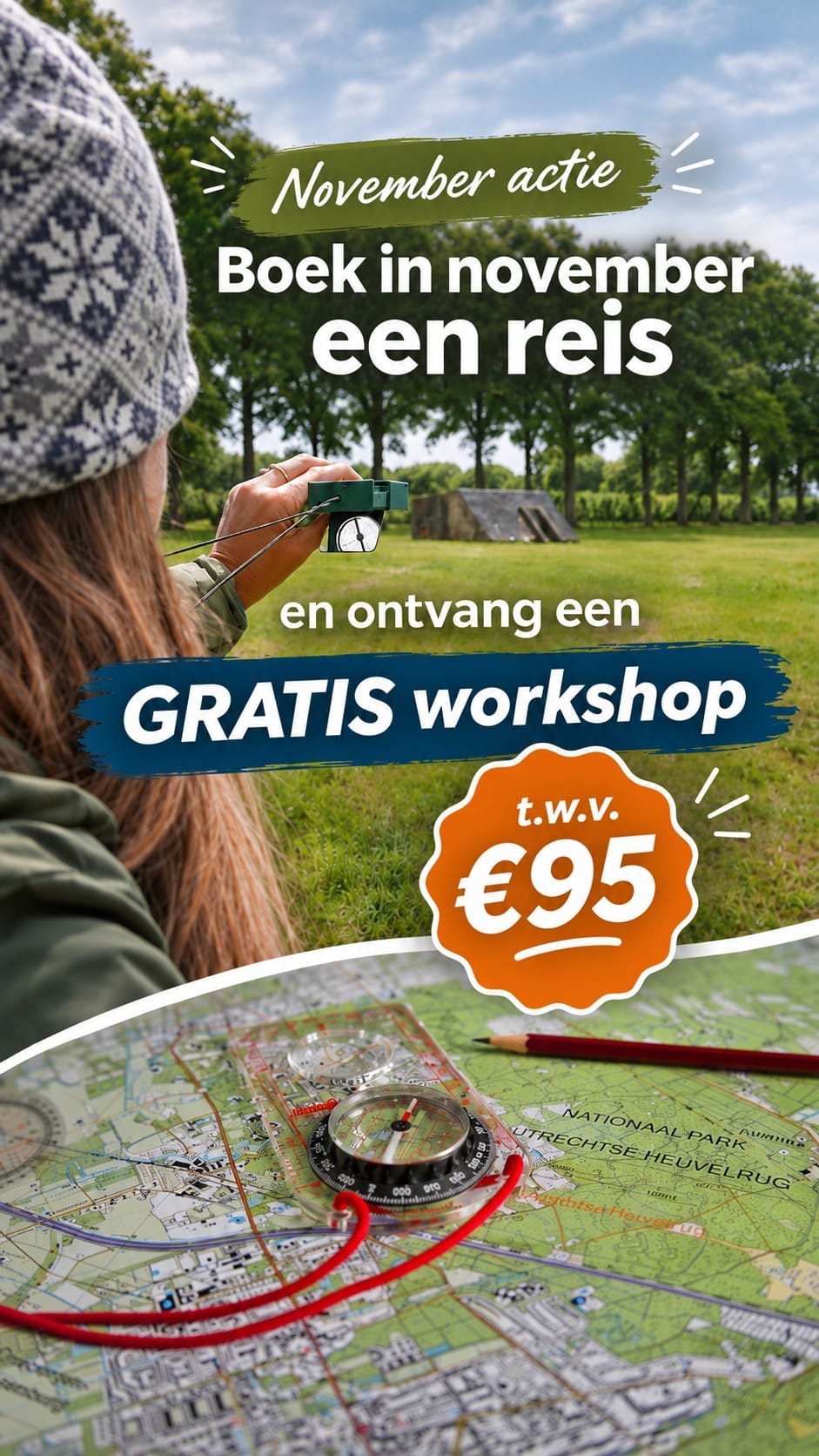
- Map and compass workshop
- The Arctic Adventure A-team
- Expedition agenda
Contact
For questions about expeditions, media, lectures, collaboration or preparation, you can contact us via Arctic Adventure.
Arctic Adventure
Utrecht, Netherlands
Website: https://arcticadventure.nl
Last updated: July 28, 2026.


 Facebook
 Instagram
 Pinterest
 LinkedIn
 YouTube
 WhatsApp
 Arctic Adventure Happenings