
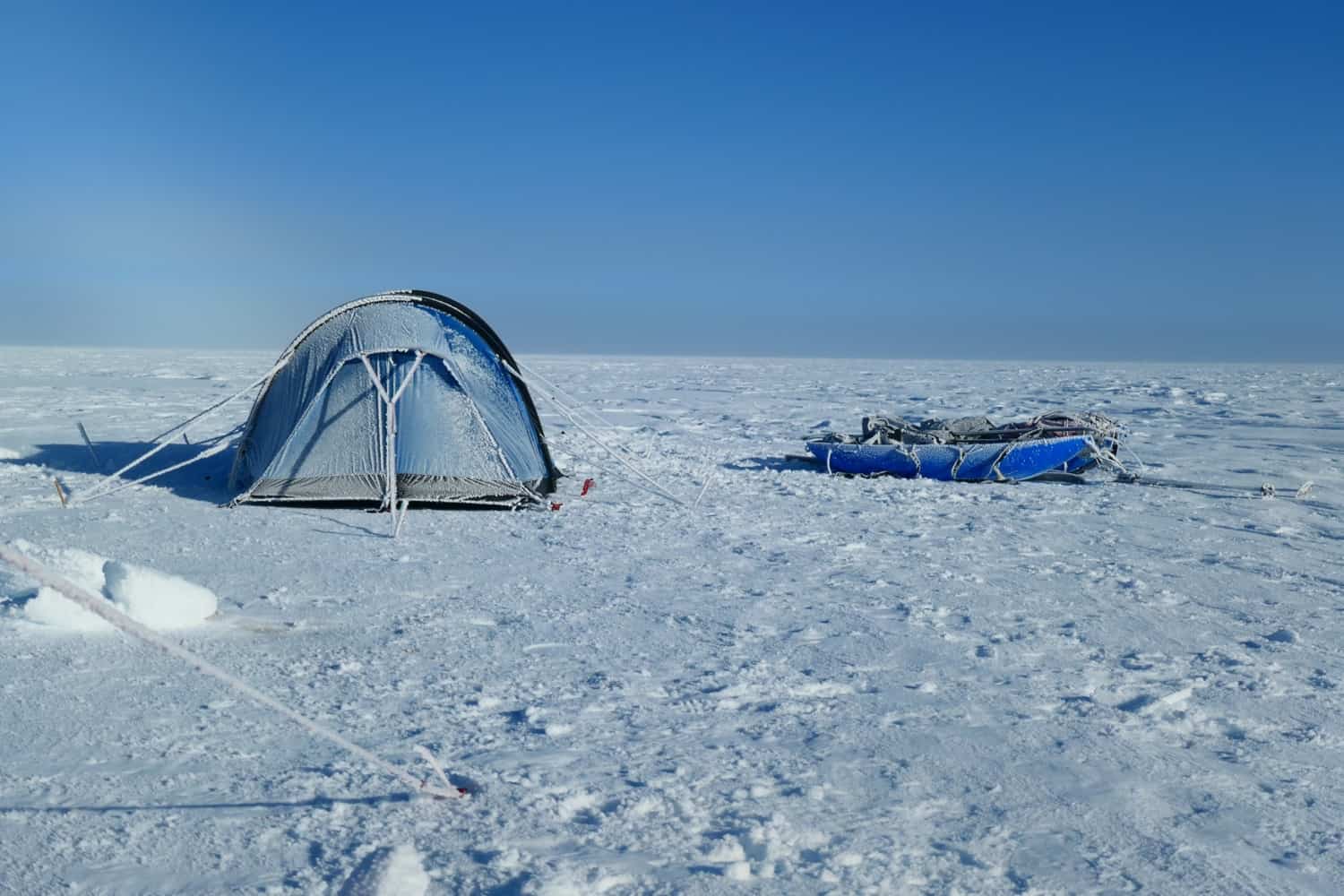
Charging electrical equipment during the expedition
Listen to Saturday’s update from the Greenland ice sheet.
With an additional shoot out to Xtorm.
🗺️ Our live position on Greenland.
📢 Read all previous posts.
Sign up for the Expedition Newsflash.
During the expedition, receive alerts of new blogs in your mail.
[mc4wp_form id=”4505″]
Electronics on the 2023 Greenland Expedition
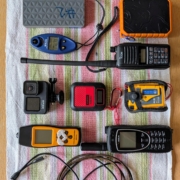
On the Greenland Expedition 2023, we carry a fair amount of electronic equipment. In this blog, I want to take you through all the electronics we need and how we charge them. Times have changed and we no longer depend on carrier pigeons and pen and paper. Let’s take a look at the order in which we charge our devices, because we have prioritized that.
The priority of charging
The single most important device we carry is the Personal Locator Beacon (PLB). Fortunately, this device has a built-in battery that lasts through 2028, so we don’t have to worry about that. When we activate the PLB, it works immediately. So this is the first device we don’t have to worry about.
In second place is the VHF radio, also known as the VHF radio. This one also has a built-in battery that stays full as long as we don’t use it. We will use the VHF radio only to contact a helicopter on its way to us. However, this will only happen once, so there is no need to charge this radio either.
Now we come to the third priority, the satellite phone. This one has the highest priority because we need it continuously charged in Greenland. We use the satellite phone not only to record this audio blog, but also to contact our Basecamp manager and medical backup. Next on the list is the inReach, our tracker. With this device, we transmit our location every two hours so you can see where we are on the website. This is important for both us and the rescue services. The smartphone ranks third to be charged because we need it to communicate with the inReach and send messages.
At number four is the Iridium Go, with which we occasionally forward photos that you can find at this blog or on social media. While pictures are nice, we feel it is more important to be able to contact our Basecamp manager. Last on the list is my own camera. While it is fun to take pictures, it is more important to relay our location and other important information.
Other electronics
In addition to these devices, we also carry other electronics. We have a headlamp, GPS, wind meter and a CO meter. These are all battery operated. The CO meter is especially important when we are cooking in the tent, to avoid being poisoned by carbon monoxide.
For all these devices, we use Energizer lithium batteries. These batteries perform well in cold conditions and are also lightweight. This is ideal for our expedition in Greenland.
Charging the devices
To charge our devices, I take two powerbanks with me. The other participants will probably take one power bank, but I will take two because I need to charge more devices. Should a power bank break down, it’s nice to have a spare.
I charge my powerbanks using a solar panel. I use a solar panel and power bank of the X-Storm brand, as I received them for free from the Houten-based company. This brand works well even in extreme cold (-20 to -25 degrees Celsius).
Last, but certainly not least, are the cables. I bring a USB-C cable, a mini-USB cable and a cable for my Iridium satellite phone. These cables are essential for charging and using our devices.
Conclusion
These are the electronic devices we are taking with us on the 2023 Greenland Expedition. Charging these devices has a certain priority, with the satellite phone having the highest priority. We use Energizer lithium batteries and charge our powerbanks using a solar panel. With this equipment and power supply, we are well prepared for our expedition. Thanks for reading and until next time!





 Facebook
 Instagram
 Pinterest
 LinkedIn
 YouTube
 WhatsApp
 Arctic Adventure Happenings



Leave a Reply
Want to join the discussion?Feel free to contribute!